Schedule & Speakers
June 1st, 2026 - Hall A3 - Vienna, Austria
| Time | Info | |
|---|---|---|
| 9:00 | Organizers: Introductory Remarks | |
| 9:30 |

|
Keynote: Hengshuang Zhao Online talk The University of Hong Kong Title: Empowering Embodied Robots with Physical Intelligence
World model driven embodied intelligence aims to build general agents that use an internal simulator to understand physical laws, predict environmental changes, and execute long horizon complex tasks, providing a pathway to next generation autonomous robots. Guided by the thread “Build-Perceive-Create”, we first analyze the limitations of current world models and propose an egocentric framework for real time immersive interaction in virtual environments. We then develop a physics aware video generation pipeline, showing that conventional approaches often produce outputs inconsistent with physical laws; we address this by injecting physics into representations and sampling through reinforcement learning and generative feedback. To overcome bottlenecks in embodied creation—short horizons, weak instruction following, and limited linguistic diversity, we use sparse point flows to simplify cross modal alignment and improve manipulation precision, while introducing intermediate rewards from a referee LLM to sustain long horizon learning. For deployment, we bridge the sim-to-real gap with geometry-centric perception and hybrid control. Looking ahead, we outline a self-evolving closed loop where world models generate the demanded embodied training data including corner cases, and deficient behavior of embodied agents feeds back the insufficient type of data, yielding systems that transition seamlessly from virtual to the physical world.
|
| 10:00 |
|
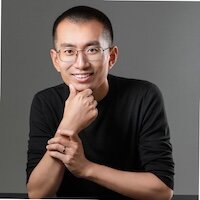
Keynote: Steve Xie Online talk Founder & CEO of Lightwheel Title: Building the Continuous Learning System for Physical AI
Physical AI demands orders of magnitude more data than language models, yet real-world data collection alone cannot scale to meet that need. Lightwheel has built and operates a simulation-centric data engine at scale, delivering physically accurate world generation, robot-agnostic behavior data, and rigorous model evaluation. Grounded in real deployment experience serving frontier robotics teams globally, this session offers a practitioner's view on how simulation infrastructure accelerates the development of humanoids and physical AI.
|
| 10:30 | Coffee break | |
| 11:00 |

|
Keynote: Jiajun Wu Stanford Keynote video https://youtu.be/H7Kd7ei_i6A Title: Physical Grounding of Generative Digital Twins for Robotics
Much of our visual world has its intrinsic, physical structure: scenes are made of objects; objects have their geometry, texture, material, and physical properties. With the rapid development of neural visual generative models, what role does such structural information play, or do we still need it at all? In this talk, I will discuss our recent efforts to build generative digital twins that are not only visually realistic, but also physically grounded. Beyond reconstruction and generation, I will also demonstrate how these objects can bridge the sim-to-real gap for robotic manipulation.
|
| 11:30 |

|
Keynote: Ajay Mandlekar NVIDIA Keynote video https://youtu.be/cPFO9-W3J18 Title: Removing the Barriers to Simulation Adoption with Automated Environment Construction and Synthetic Data Generation
Real-world robot training and evaluation are costly, labor-intensive, and difficult to scale. While simulation offers a powerful alternative, it is often hindered by high engineering overhead and the persistent sim-to-real gap. This talk explores how to dismantle these barriers. I will introduce a system that automatically generates digital twins and "cousins" from real-world videos, streamlining both policy training (real-to-sim-to-real) and evaluation (real-to-sim). Finally, I will discuss scaling policy training with simulation to complex, non-traditional domains, including deformable object manipulation and humanoid loco-manipulation.
|
| 12:00 | Spotlight talks | |
| 12:30 | Lunch & Poster session | |
| 14:00 |
|
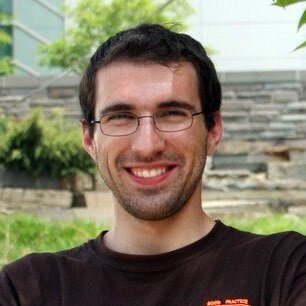
Keynote: Manolis Savva SFU Keynote video https://youtu.be/2g4X8L-_pFk Title: Digital Twins for Embodied AI: Scaling Acquisition & Generation
Simulated indoor 3D scenes are increasingly used to develop and evaluate embodied AI agents and autonomous robot systems. However, the effort required to create the digital twins of real-world objects and scenes necessary for such simulations remains a key bottleneck to scalability and generality. In this talk, I will describe recent projects that aim to alleviate this bottleneck through both real-world acquisition and synthetic generation, focusing particularly on physically-grounded interactive 3D objects, and controllable generation of 3D scenes.
|
| 14:30 |

|
Keynote: Ingmar
Posner Oxford Title: Back to the Future: A Case for Structured Representation Learning in World Models
World Models are not a new idea and have been central to the robotics endeavour almost since its inception. Yet, catalysed by advances in deep generative models, world models are now seemingly everywhere in robot learning. As ever, they hold promise to provide a predictive substrate capable of supporting forward planning, as well as safe and efficient policy learning entirely in imagination. Moreover, contemporary world models in principle allow us to bypass the traditional real-to-sim and sim-to-real gaps entirely by learning directly from real-world observations. Yet currently this comes at the cost of prohibitive data and compute requirements. Success largely relies on scaling laws. This causes many of the issues commonly discussed in robotics contexts, such as a distinct lack of physical grounding and unphysical hallucinations as opposed to realistic forward predictions particularly in lower data regimes. In this talk, I will make the case that, while we are effectively revisiting an old concept with new methods, it is time to resurrect more of our previous thinking. In particular, let’s abandon our reliance on pure scaling in favour of structured representation learning for world models. I will motivate this vision and outline the foundational research from my lab toward a new class of Mechanistic World Models, where structured representation learning is used to break down dynamical systems into fundamental mechanisms that capture re-usable interaction patterns and local causal dependencies.
|
| 15:00 |

|
Keynote: Ken Goldberg UC Berkeley Keynote video https://youtu.be/Hb417ElFzPA Title: Real2Render2Real: Scaling Robot Data Without Dynamics Simulation or Robot Hardware
Scaling robot learning requires vast and diverse datasets. Yet the prevailing data collection paradigm—human teleoperation—remains costly and constrained by manual effort and physical robot access. We introduce Real2Render2Real (R2R2R), a novel approach for generating robot training data without relying on object dynamics simulation or teleoperation of robot hardware. The input is a smartphone-captured scan of one or more objects and a single video of a human demonstration. In contrast to simulation, R2R2R renders thousands of high visual fidelity robot-agnostic demonstrations by reconstructing detailed 3D object geometry and appearance, and tracking 6-DoF object motion. R2R2R uses 3D Gaussian Splatting (3DGS) to enable flexible asset generation and trajectory synthesis for both rigid and articulated objects, converting these representations to meshes to maintain compatibility with scalable rendering engines like IsaacLab but with collision modeling off. Robot demonstration data generated by R2R2R integrates directly with models that operate on robot proprioceptive states and image observations, such as vision-language-action models (VLA) and imitation learning policies. Over 1000 physical experiments suggest that models trained on R2R2R data from a single human demonstration can match the performance of models trained on 150 human teleoperation demonstrations. (Joint work with Justin Yu, Letian Fu, Huang Huang, Karim El-Refai, Rares Andrei Ambrus, Richard Cheng, and Muhammad Zubair Irshad.)
|
| 15:30 | Coffee Break | |
| 16:00 |

|
Keynote: Oier Mees Online talk Microsoft Title: Towards Self-Improving and Steerable Robot Policies
blank
|
| 16:30 | Panel discussion Panelists: Ajay Mandlekar, Jiajun Wu, Manolis Savva, Ingmar Posner, Ken Goldberg |
|
| 17:30 | Organizers: Closing Remarks |